


How Sleep Works and What Actually Matters
Last week, you began paying closer attention to your daily patterns: when your energy rises and falls, how your evenings unfold, and what your nights really feel like. That awareness is the foundation for meaningful, lasting change.
This week, we’ll build on that by exploring how sleep actually works. Not in complex scientific terms, but in simple concepts that reveal what truly influences rest. When we understand these principles, we can make small, strategic changes that have a real impact.
Think of this week as giving you the “user manual” for your sleep.
Your Two Sleep Systems
1. Circadian Rhythm (Your Internal Clock): keeps your body operating on a healthy wake-sleep cycle.
This is your 24-hour timing system. It determines:
- When you feel alert
- When you start to feel sleepy
- When your body wants to rest and recover
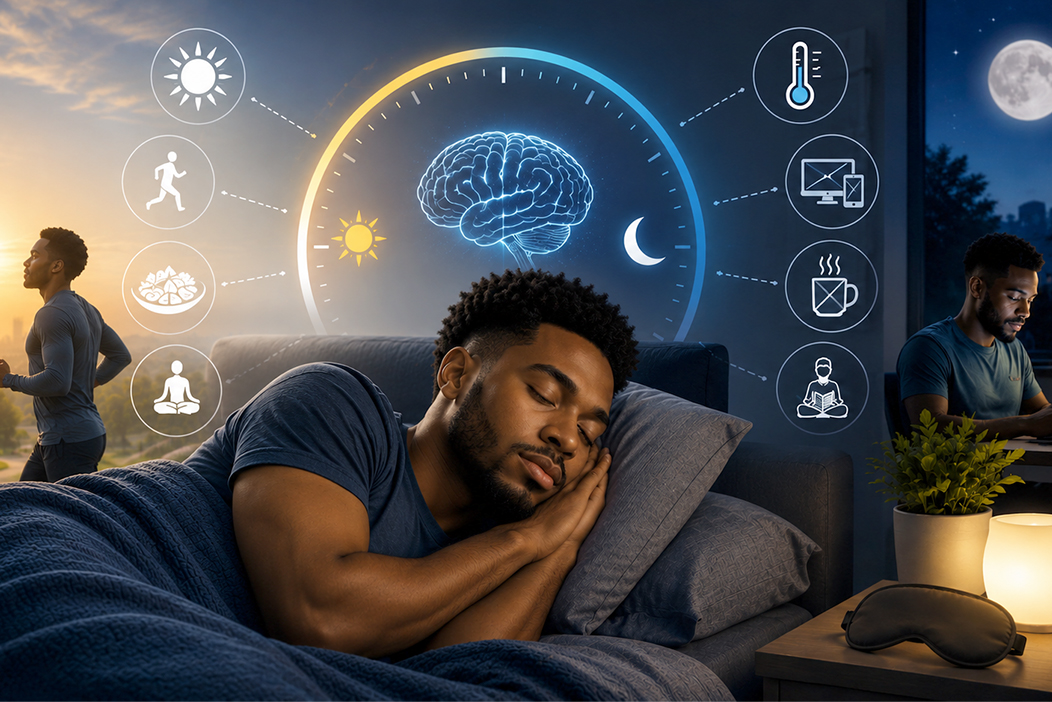
Light is the main signal that sets this clock, especially morning outdoor light and evening screen or bright light exposure. When your circadian rhythm is aligned, sleep feels more natural. When it’s off, you might feel wired at night or groggy in the morning.
Circadian rhythm also affects body processes like hormones, digestion, and body temperature. While light and dark have the biggest effect on your circadian rhythm, other things like food intake, stress, and physical activity also have an impact.
2. Homeostatic Process (Your Sleep Pressure System): the growing need for sleep the longer you are awake.
Here’s how it works:
- As you are awake and active, a compound called adenosine builds up in the brain.
- The more adenosine present, the stronger your drive to sleep.
- During sleep, your brain clears this adenosine, which is why you feel more alert after a good night’s rest.
Certain habits can enhance or disrupt this process. For example, caffeine blocks the receptors that detect adenosine so the brain can’t “feel” the rising sleep pressure.
Why These Systems Matter
Everything you do- from the light you get, to the food you eat, to the stress you carry- affects one or both of these systems. When your sleep pressure is aligned with your circadian rhythm, your body knows naturally when it’s time to wind down. When these systems clash, sleep can feel inconsistent or not refreshing.
Here are three high-impact, evidence-supported levers:
1. Light Timing
-
- Morning outdoor light helps anchor your clock and boosts daytime energy.
- Bright screens at night signal your brain to stay awake.
2. Temperature
-
- You fall asleep more easily when your body cools down.
3. Evening Wind-Down
-
- Your brain needs time to transition from stimulation to calm.
This week, start connecting what you observed about your sleep last week with what you now know about your sleep systems. Which small daily pattern is most likely affecting your sleep clock or sleep pressure?
Next week, we’ll put this knowledge into action with a simple, flexible challenge you can tailor to your lifestyle.
Resources
Cleveland Clinic: Circadian Rhythm
National Institutes of Health (NIH): Understanding Sleep
Yale School of Medicine: Good Sleep Recipe