

Staying Safe and Healthy During Time Outdoors
Spending time outdoors brings so many benefits, but summer also comes with environmental conditions that are important to understand and navigate. Being aware of how heat, sun, humidity, and air quality affect your body helps you enjoy the season without feeling drained or overwhelmed.
This isn’t about avoiding the outdoors, it’s about feeling confident, prepared, and comfortable while you’re out there. Below are key things to pay attention to, along with simple habits that help you stay healthy while enjoying time outside.
Understanding Heat and How It Affects You
Hot weather places extra demands on your body. When temperatures rise, your system works harder to regulate internal temperature, which can change how you feel even during simple outdoor activities.
Some early signs that your body is getting too warm include:
- Feeling lightheaded or slightly dizzy
- Sudden fatigue or “heavy” feeling in your limbs
- Headache or a sense of pressure
- Excessive thirst
- Skin that feels unusually warm or flushed
Responding early, by taking a break, hydrating, or finding shade, can prevent more serious heat-related issues.
Using Sun Exposure Wisely
Sunlight supports mood, energy, and vitamin D levels, but intense UV exposure requires some attention. You don’t need to avoid the sun; you just need to be aware of when and how you’re in it.
Helpful reminders:
- UV levels are highest from late morning through mid-afternoon, so plan outdoor activities earlier or later
- Water, sand, and pavement reflect UV rays and intensify exposure
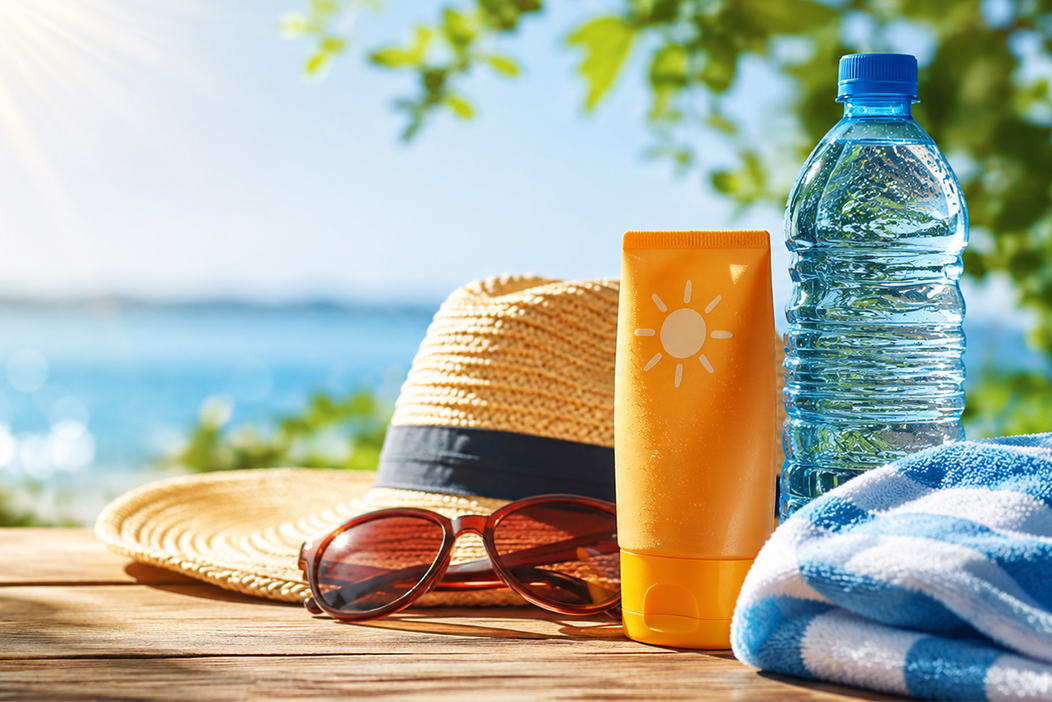
- Sunscreen works best when applied before going outside, not after
- Lightweight, breathable clothing, hats, and sunglasses act as comfortable, reliable protection
- The goal is to enjoy the sunlight while being mindful of its strength.
The Role of Hydration and Electrolytes
Hydration needs increase naturally during summer, even with light activity. Your body loses fluids more quickly through sweat, and the combination of heat and movement can make dehydration sneak up on you.
A few helpful practices:
- Drink water consistently throughout the day, not all at once
- Add electrolytes on particularly hot or active days
- Include hydrating foods like berries, citrus, cucumbers, and leafy greens
- Carry a water bottle when you know you’ll be outside for more than 15–20 minutes
- Hydration is one of the simplest ways to support your energy and comfort outdoors.
What to Look Out For in Your Environment
Your surroundings can tell you a lot about how safe and comfortable outdoor time will be. Noticing these factors helps you plan your day more effectively.
Pay attention to:
- Air quality: smoke, pollen, and pollutants can be higher on hot days
- Humidity: moisture in the air makes heat feel more intense
- Ground temperature: pavement and turf heat up quickly in direct sun
- Wind: breeze can offer natural cooling and reduce perceived heat
- Shade availability: can dramatically change your comfort level
- A little awareness makes outdoor activities much easier to enjoy.
Summer invites you outdoors, but it also asks you to pay attention. When you listen to the signals your body gives you- thirst, warmth, fatigue, the need to rest- you build a healthier relationship with the season and with yourself. The more aware you become of the conditions around you, the easier it is to create outdoor experiences that feel good, support your health, and fit naturally into your daily life.
Explore additional resources:
Centers for Disease Control and Prevention: Sun Safety Facts
Mayo Clinic: How to stay hydrated over the summer